
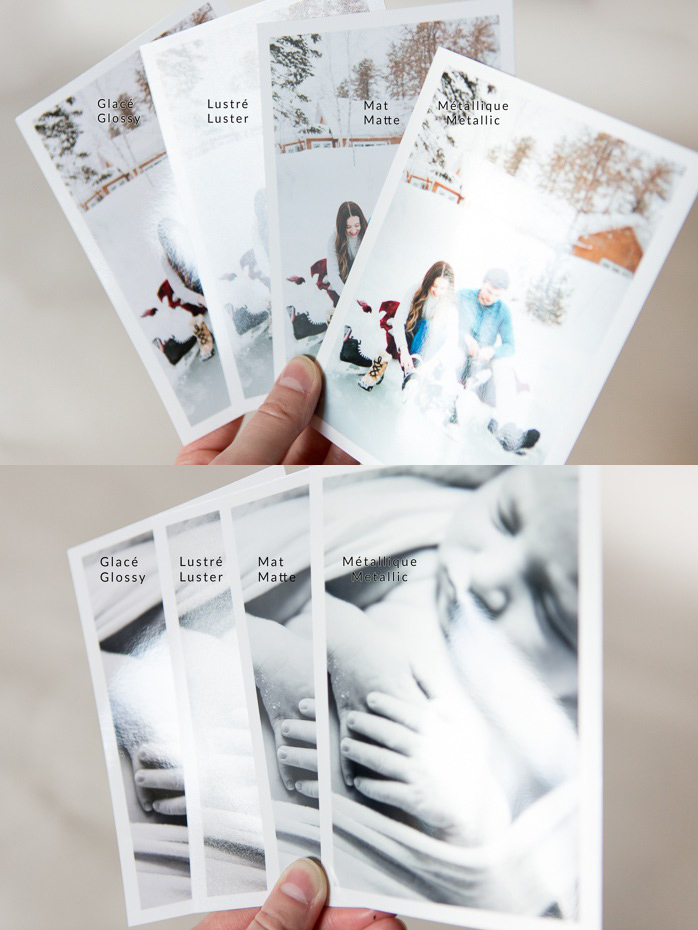
A question I often get is: “Which photo paper should I choose?” To help you better understand your options, here is a comparison of glossy, lustre, matte and metallic papers..
To ensure optimal quality for my clients, all products available in my print shop are made in a Canadian lab reserved for professional photographers.
Photo prints are produced in a darkroom on light-sensitive archival paper. In simple terms, images are projected onto paper coated with a light-reactive emulsion. Once the chemical process is complete, the image becomes embedded in the paper. This method ensures colours and contrasts remain true to what was intended in post-production. It also provides greater longevity compared to inkjet prints from big-box stores, which may fade over time.
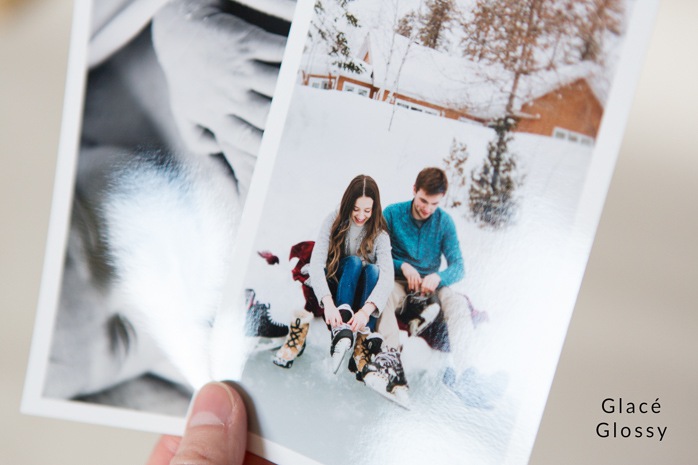
Glossy
Glossy paper is by far the most popular! Its finish enhances colour saturation and contrast, creating vibrant images. However, it reflects a lot of light and is more prone to fingerprints. It’s best to handle prints with care, ideally with gloves.
This paper is perfect for prints that won’t be handled often, such as those placed in an album or a frame. It’s less recommended for frames with glass, as reflections can become distracting. Prints on glossy paper may sometimes have a slight magenta (pink) tint. Thickness: 0.20mm.
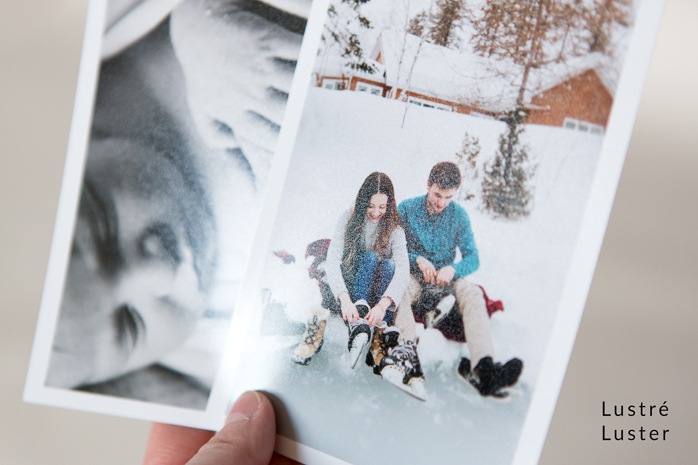
Luster
Luster paper is, without a doubt, my personal favourite! It offers the perfect balance between glossy and matte. Colours and contrast are well defined without being too intense.
Its slightly textured finish makes it more resistant to fingerprints, allowing you to handle prints easily with bare hands. It’s a very versatile option, suitable for both albums and framing. In fact, I calibrate my screen to match this finish, making it a very accurate representation of the final result. Thickness: 0.22mm.
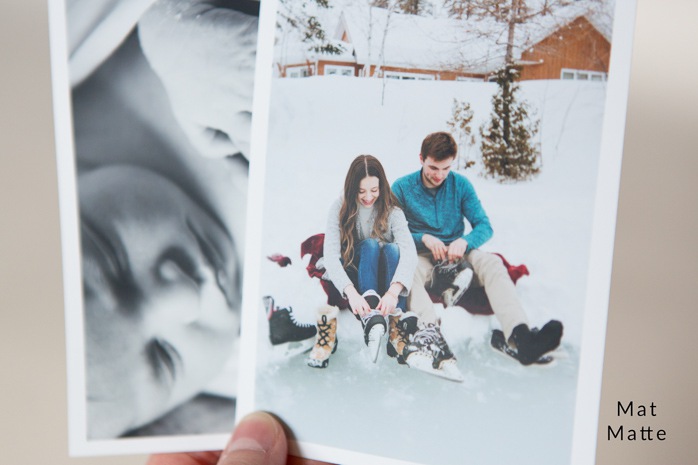
Matte
Matte paper offers a softer, more contemporary look. Its main advantage is that it does not reflect light, regardless of the viewing angle. Colours appear more velvety and contrasts are more subtle. Blacks tend to appear more like a charcoal grey.
It is easy to handle and is ideal for prints that will be touched frequently. Being thicker, it also holds up very well over time. Prints on matte paper generally appear lighter and may have a slight cyan (blue) tint. Thickness: 0.23mm.
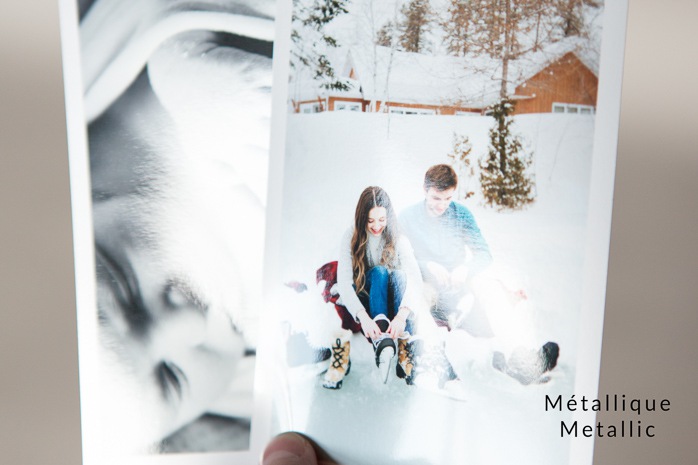
Metallic
Metallic paper is a newer option, but its look is truly unique! It features a thin Mylar base, which gives it that distinctive metallic effect. It reflects more light than any other paper type, resulting in highly saturated colours and strong contrast for a dramatic effect. It works especially well for black and white images.
In my opinion, its most striking feature is the subtle three-dimensional effect it gives to photos. It truly shines when printed in large formats and displayed on a wall. Prints on metallic paper tend to appear darker and have a slight silvery tone. Thickness: 0.22mm.
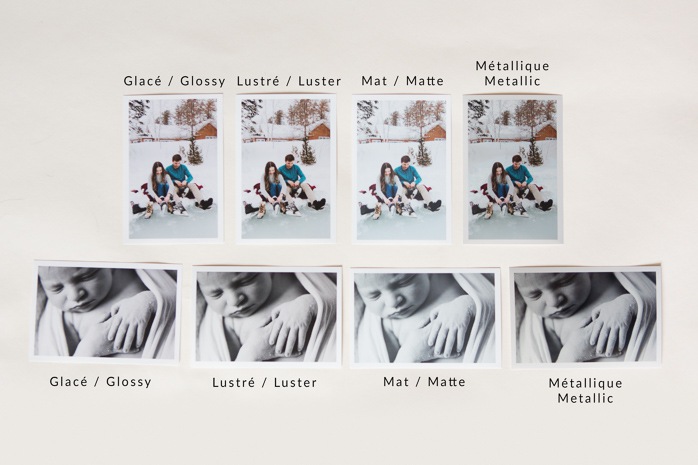
Here are side-by-side comparisons of the different paper types:
Bonus – Les différents formats d’impression
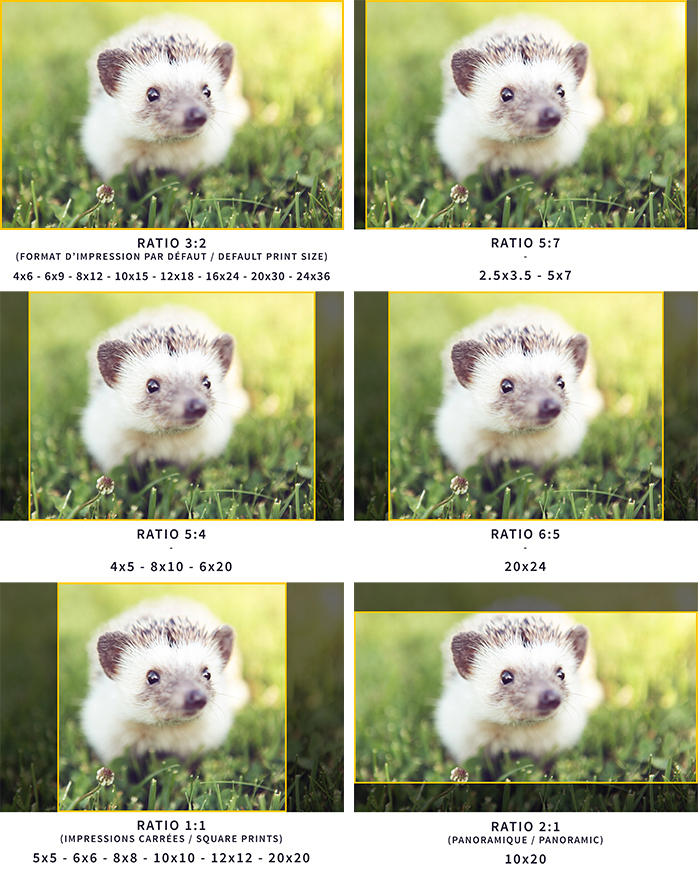
Most digital photographers use the 3:2 ratio, inherited from the days of 35mm film. It’s also the format I use! Unless otherwise specified, all images are delivered in this ratio to make printing easier. It’s also the ratio that offers the widest range of print sizes.
It is, however, possible to print your photos in other ratios. In those cases, some cropping will be required. The further the chosen ratio is from 3:2, the more of the image will need to be cropped.
Most of the time, I leave extra space in my compositions to give you flexibility when printing. That said, it’s not always possible. In those situations, don’t hesitate to try different formats to see what works best for your needs.
Voici des comparaisons entre les différents ratios d’impression:
* The yellow area represents what will be printed, while the darker areas will be cropped and will not appear in the final image
Last update: May 2026




Bonjour, quel appareil de photos vous utilise en numérique et pellicule 35 mm.
Moi j’ai LEICA M4 avec summicron et Nikon Z6 et Nikon D700 avec optiques NIKON.
J’ai beaucoup aime votre article sur les différences sur les papiers photos
Merci, beaucoup, et bonne journée